Capture the unwritten family recipes, exactly how they are made
Family Recipe Kit
The recipe lists the ingredients. The person making it knows everything the card leaves out.
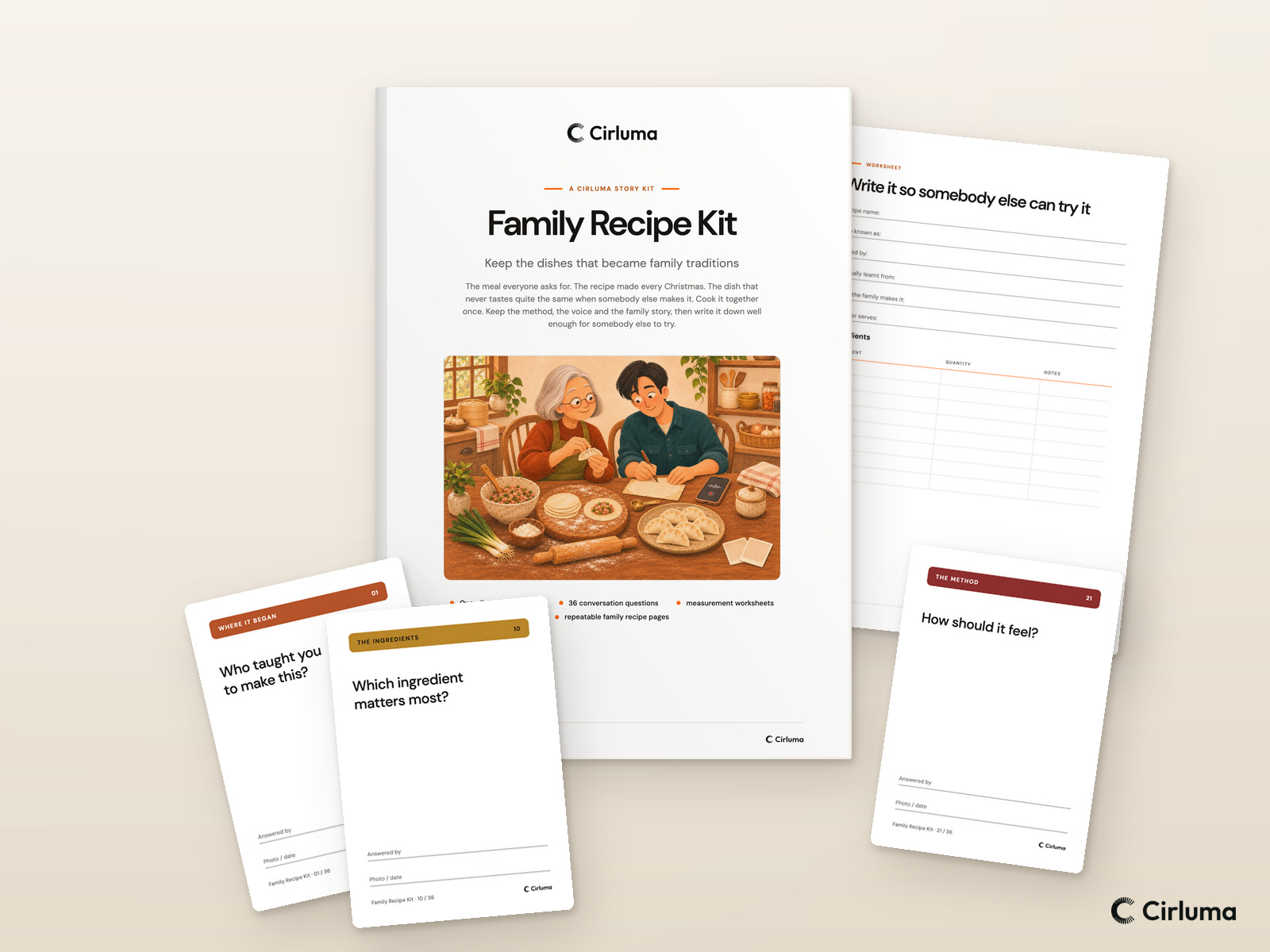
The Family Recipe Kit includes
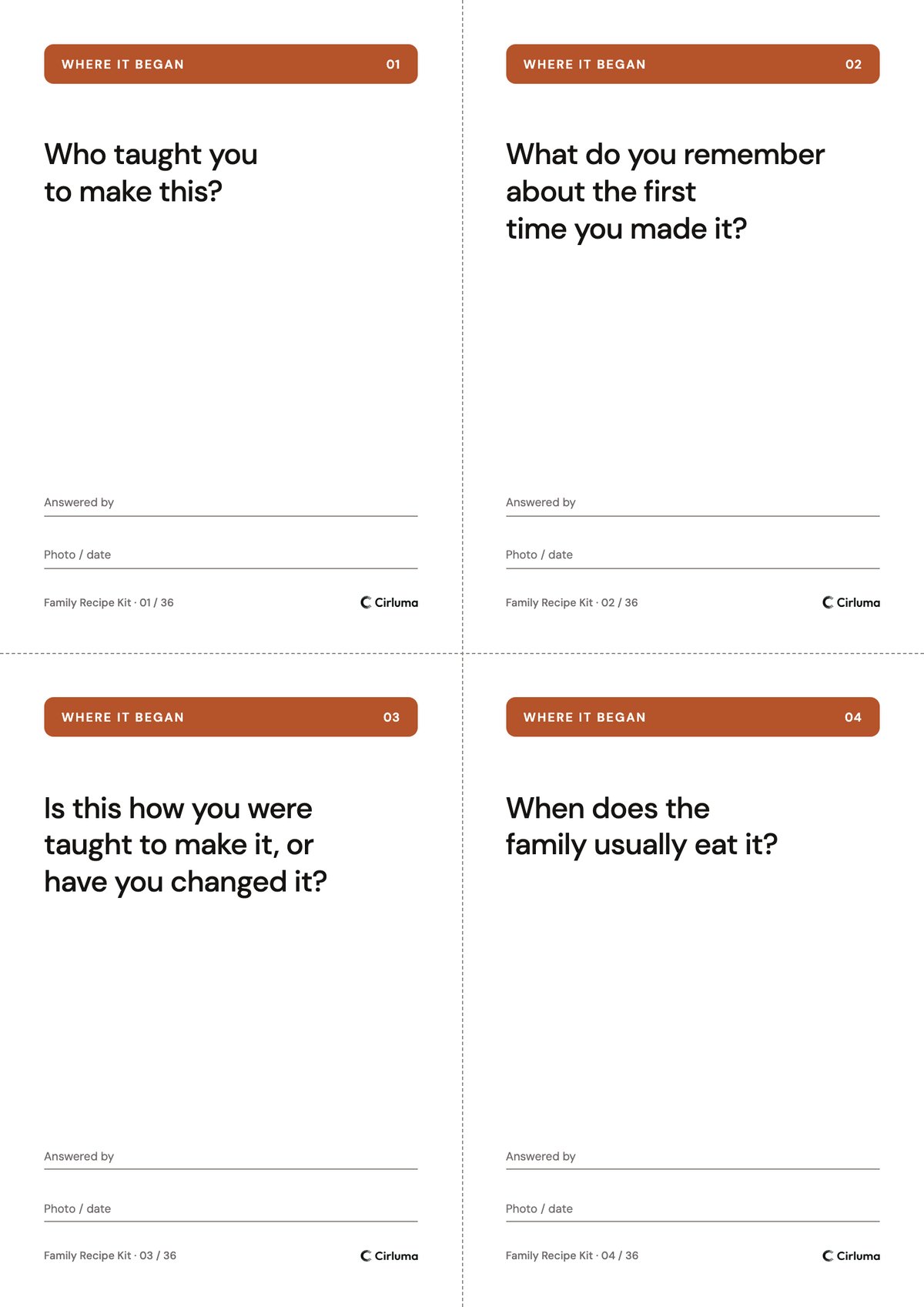
- 36 conversation cards on cut-out A6 cards, in four themes
- A one-dish cooking guide, with how to ask permission and what to prepare
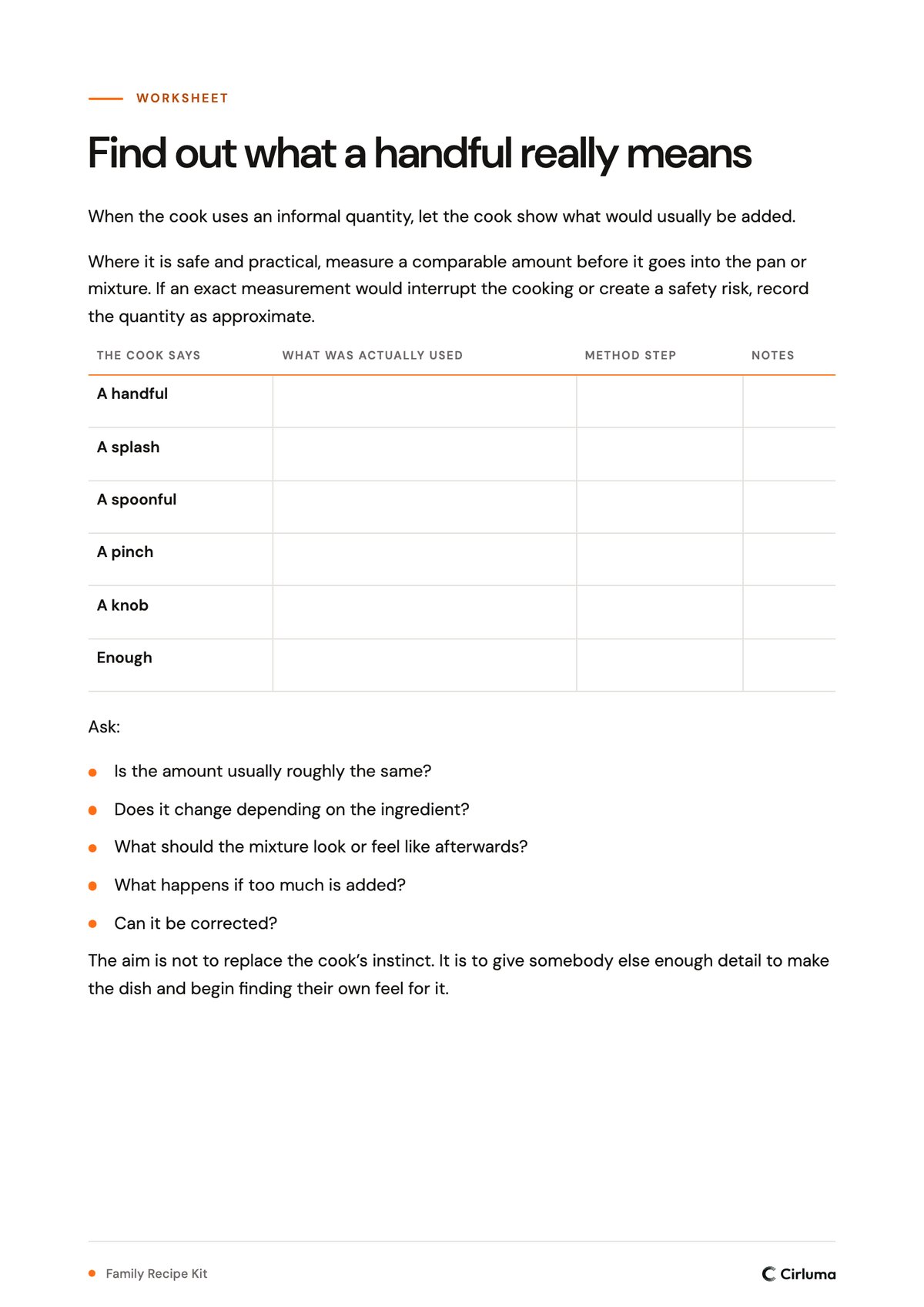
- Worksheets for handfuls, splashes and spoonfuls, and for the signs that show when it is ready
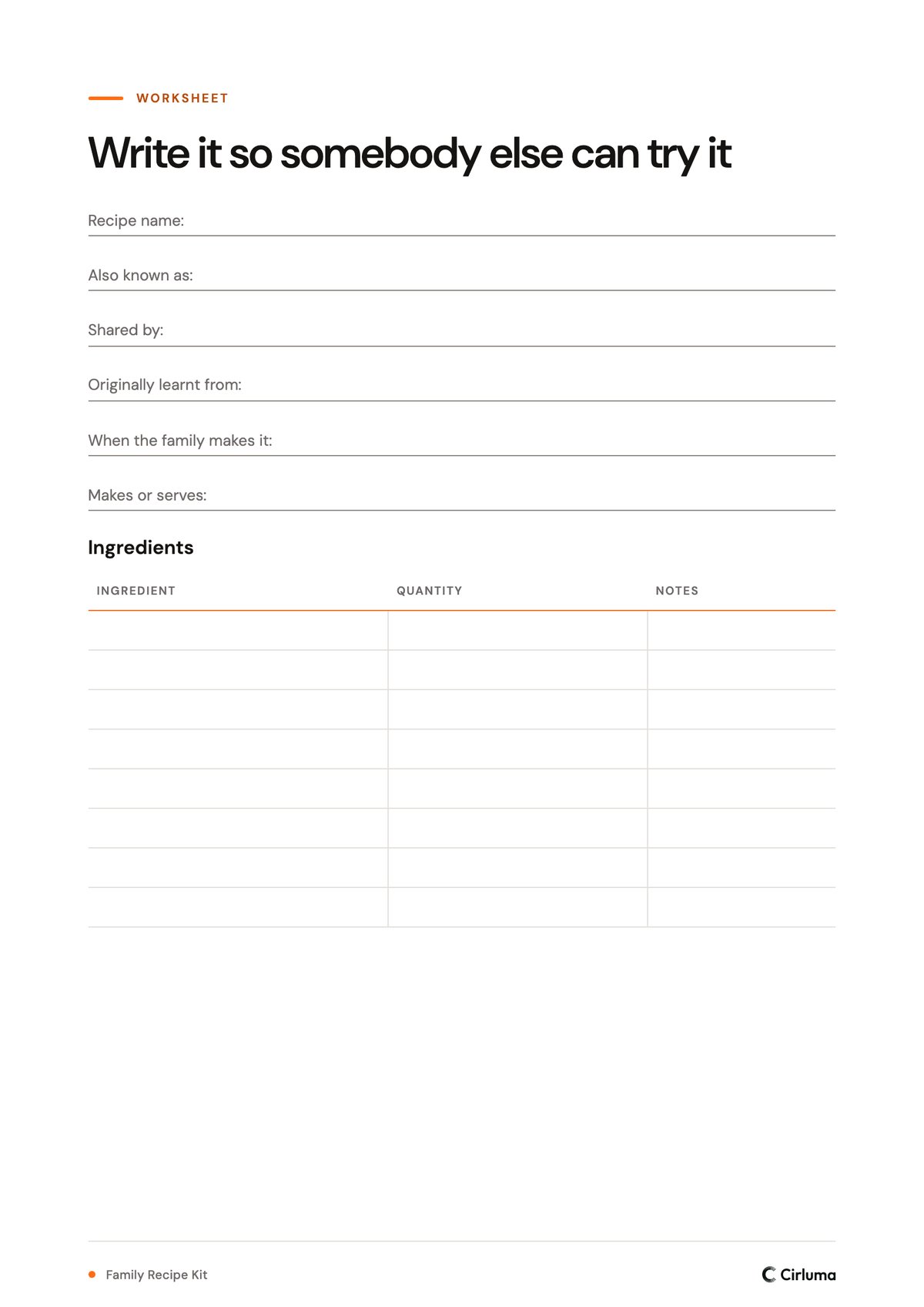
- A recipe page with ingredients, method, family story and what to do if it goes wrong
- Pages for different family versions, a test cook and the recipe’s path through the family
- A twelve-recipe planner, and a personal-use licence
35 printable A4 pages · 36 cut-out A6 question cards · A recipe page, test-cook page and twelve-recipe planner
£12.99
- Focus on one familiar dish in a shared cooking session
- Take photos of the stages that are hard to describe
- Printable worksheets for quantities
Secure payment · Instant digital download
- Printable PDF. No physical product will be posted.
- One-off purchase. No subscription required.
- Need help? We’ll put it right.
Questions? support@cirluma.com
Sound familiar?
A handwritten recipe may say “a handful” or “until it looks right”, leaving another cook to guess.
The person who knows the dish may understand the texture, smell and timing without thinking to explain them.
You want to preserve who taught them, when the family eats it and what makes this version theirs.
How it works
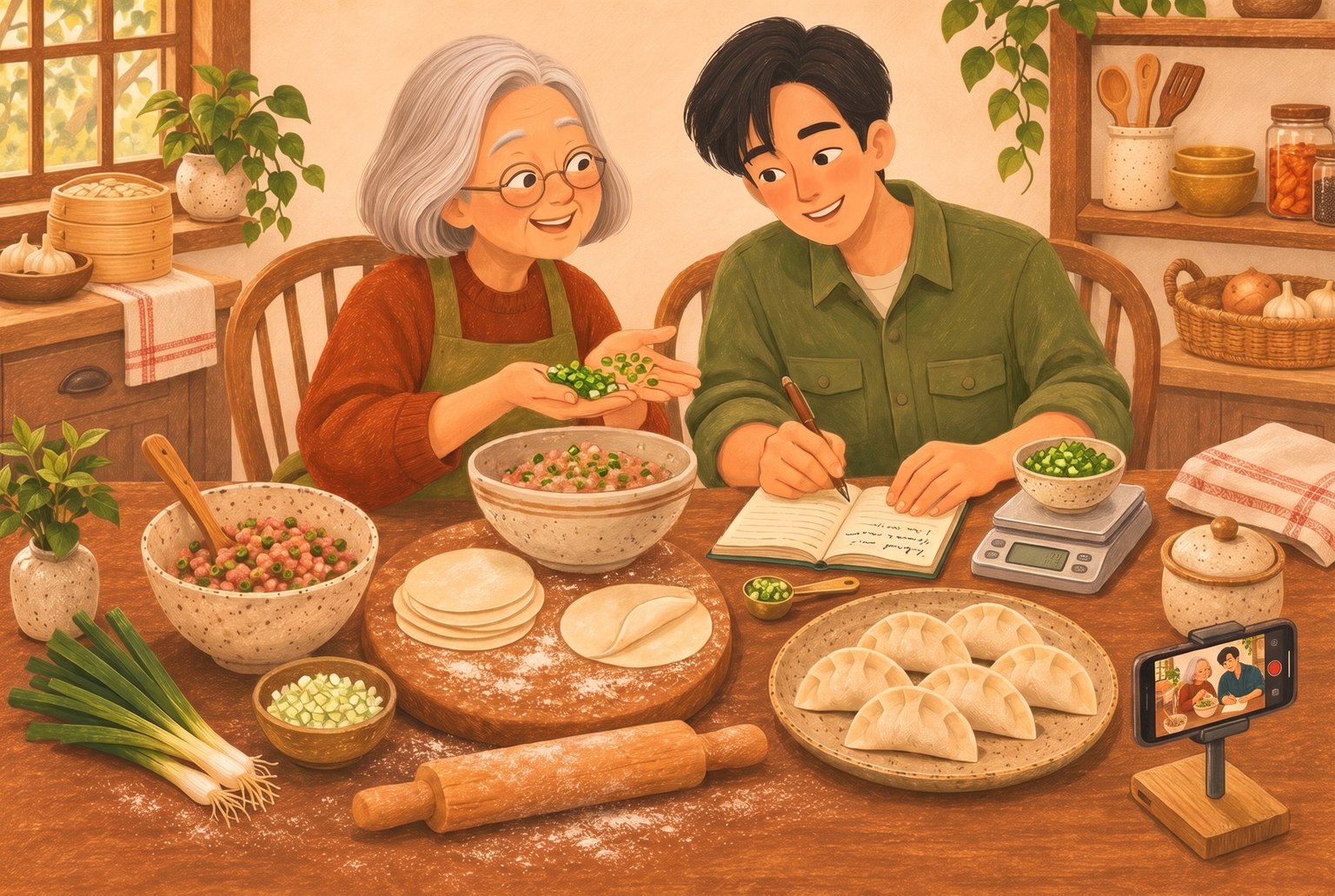
Start with one familiar dish and let the cook work in their usual way while you notice and record the details.
Choose one dish and ask
Pick a recipe the cook knows well. Explain what you hope to keep and ask separately before taking photos or recording.
Cook as usual
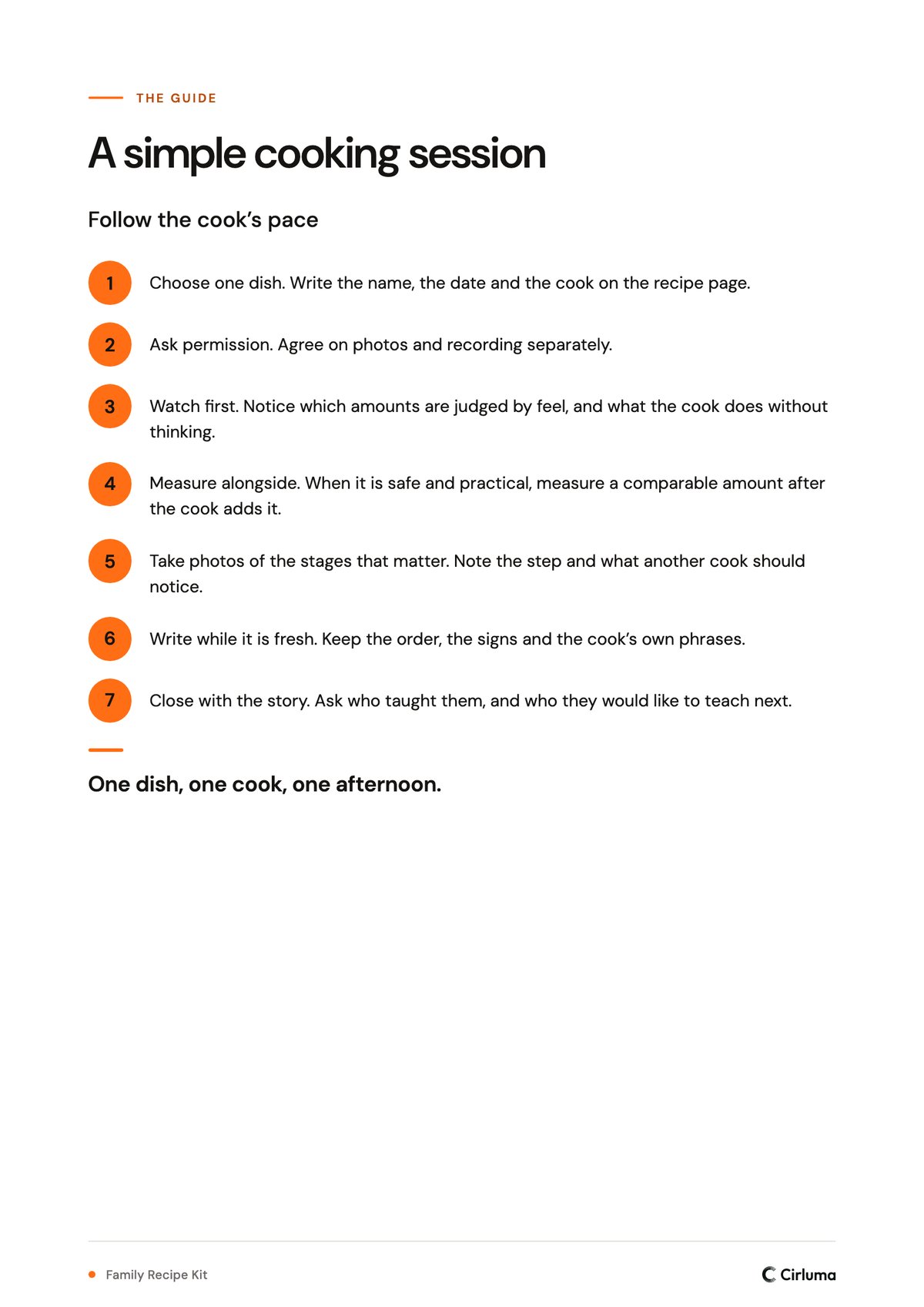
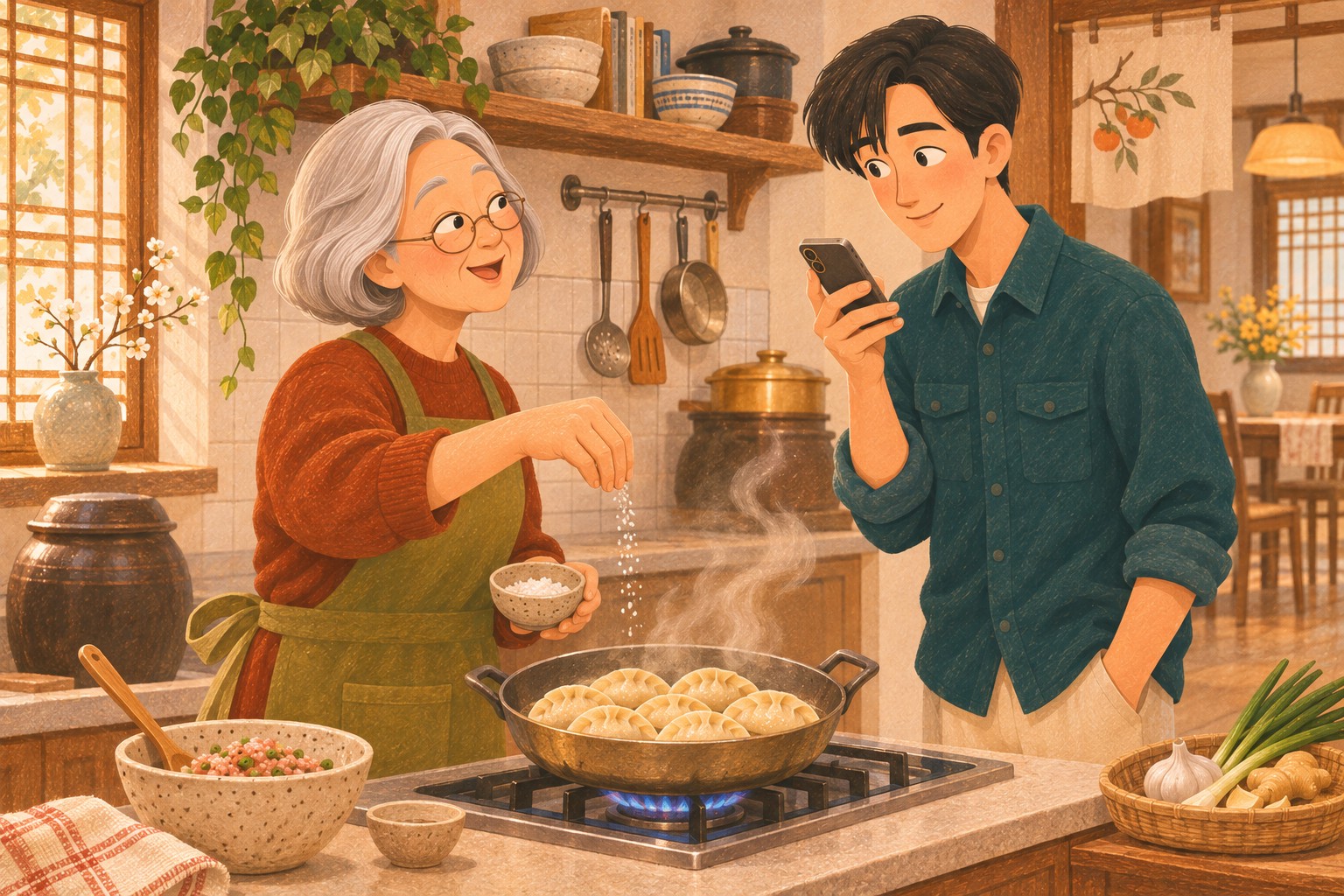
Gather the familiar ingredients and utensils. Take photos at key stages, note quantities and ask what the cook looks for, hears, smells or feels.
Write the method and story
Record the steps in order, including informal measures and variations. Keep the cook’s explanations and the story of the dish with the recipe.
Look Inside
Where it began
Who taught you to make this?
Start with a dish
The ingredients
Which quantities do you usually judge by eye?
Start with a dish
The method
Which step is usually missing from written versions?
Start with a dish
The family story
Which version does the family argue about?
Start with a dish
Four of the 36 cards, one for each part of the cooking.
A recipe someone else can make
The ingredients, amounts and method in the order the dish is really made.
The cook’s own words, tips and signs that it is ready, with photos of the stages that matter.
The story behind the dish and each family version, kept with the people who shared them.
Give it as a gift
Print the cards and recipe pages and give them with the ingredients for the dish.
Or send the PDF to a brother, sister or cousin, so each of you can cook with a different relative.
Instant download: ready for the next family meal.
Gifts for grandparentsGifts for someone living with dementia
Built on established practice
The questions and method draw on oral-history practice and research into food, memory and family identity.
Drawn from a review of 34 sources, including David Sutton’s Remembrance of Repasts (2001), Tina Grace’s research on family recipes and identity, the Southern Foodways Alliance and the Oral History Society. Naming a source does not mean it endorses this kit.
This kit is for family conversations and cooking together. It makes no health claims.
Frequently asked questions
What exactly will I receive?
A downloadable PDF with 36 conversation cards, a one-dish cooking guide, worksheets for measuring informal quantities, a recipe page and a twelve-recipe planner. It is a digital product, so nothing will be posted, and you can read it on a screen or print it at home.
What if the cook never measures anything?
That is what the kit is for. Let them show what a handful or a splash looks like, then measure a comparable amount alongside when it is safe and practical. Where it is not, record the quantity as approximate.
Can I print it more than once?
Yes. Print as many copies as your own family needs. Please do not resell the kit, upload it publicly or share the digital files outside your family.
Can I get a refund?
Because it’s delivered instantly, it can’t be cancelled once downloaded. Something wrong with it? Email us and we’ll put it right.
What if I have a problem with my download?
Email support@cirluma.com using the email address from your purchase. We’ll help if you cannot access, open or download the PDF.
Begin with the dish everybody would miss
Family Recipe Kit
35 printable A4 pages · 36 cut-out A6 question cards · A recipe page, test-cook page and twelve-recipe planner
£12.99
Secure payment · Instant digital download
- Printable PDF. No physical product will be posted.
- One-off purchase. No subscription required.
- Need help? We’ll put it right.
Questions? support@cirluma.com
£12.99
Get the kit